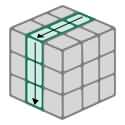
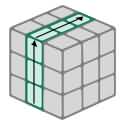
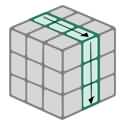
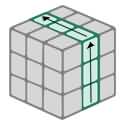
 |
NOTATIONS
Before you learn the cube, you must know of the cube language. Here are some useful notations that you will be seeing throughout this website to indicate the moves and algorithm. An algorithm means "a memorized sequence of moves whose effect on the cube is known".
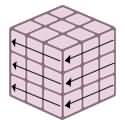
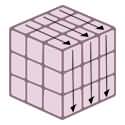
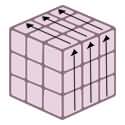
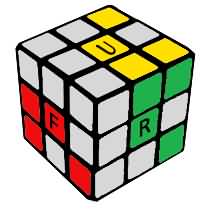
Rubik's Cube consist of six faces: Up, Down, Left, Right, Front, Back. The upper case of the first letter of each face is its face notation. For example, F = front, R = right.
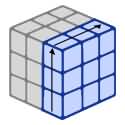
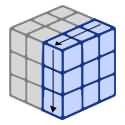
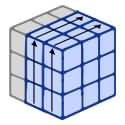
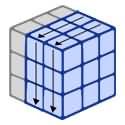
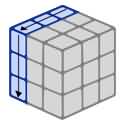
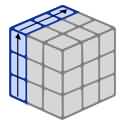
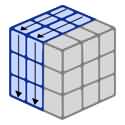
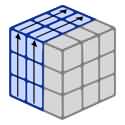
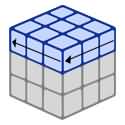
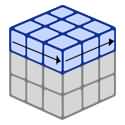
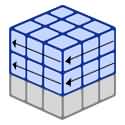
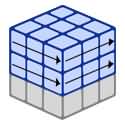
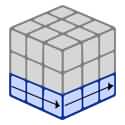
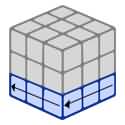
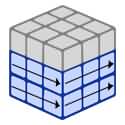
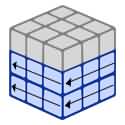
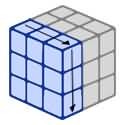
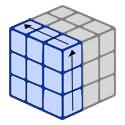
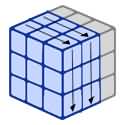
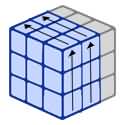
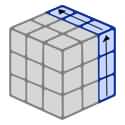
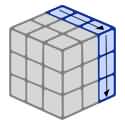
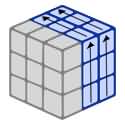
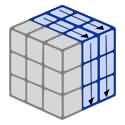
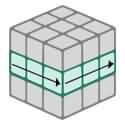
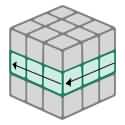
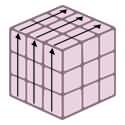
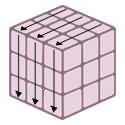
In speedcubing notation, the capital letter of the face means turning it clockwise 90 degrees. Adding a prime behind the letter means turning it anticlockwise. Lower case of the face letter means turning two layers of the face. Adding a 2 behind the letters means turning the face 180 degree. For example, R = turning right face 90 degree clockwise, R' = turning right face 90 degree anticlockwise, R2 = turning right face 180 degree, r = turning both layers of the R face. Same notation used for all six faxes.
It is also important to understand that clockwise means turning in the clockwise direction for someone who is looking at that face. From your perspective, B, which denotes a clockwise turn of the B(ack) face might seem anticlockwise. It will take some time before you get used to this. For example, a clockwise turn on the right face, R, might seem to turn in the same direction as L’, the anticlockwise of left side.
|