 |
3x3x3
CROSS
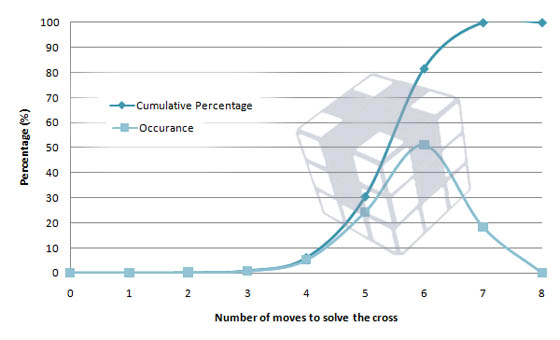
A cross is solved optimally in 5 to 7 moves. If you take more than that, you should start looking at your method of solving the cross. There should be much faster way of doing it. Before starting the timer, you should have a good idea of the position of the four edges that are going to make up the cross. Plan ahead and solve the cross at the bottom. This will allow you to look into what lies ahead in the upper layer so that you can move on into F2L as soon as you finished the cross. Also, the finger tricks are very decent. The only setback when solving cross at bottom is that it may seem a little akward for beginners at first because you cannot track the progress with the edges and if you accidentally screwed up the cross, it will ruin the solving time. It takes a some practice, but I guarantee the outcome is satisfying. Avoid cube rotations. Use “D” turns or "u" turns when necessary. The color of the cross is a personal preference. However, once you choose a color, stick to the same color all the time, so that it will greatly reduce the F2L recognition time.
|