Corners without edges
The following 3 algorithms are similar as the corners are all flipped properly; only the edges are not. The algorithms and finger tricks are similar too. So learn them together. |
| 01 |
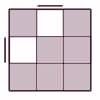 |
(M’ U M) U2 (M’ U M) |
A huge fish! Very simple algorithm. U2 connecting two repeating MUM trigger. Use left ring finger to perform M’ and left thumb to perform M. |
| 02 |
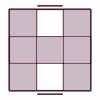 |
(R U R’ U’) (M') U R U’ r’ |
H orientation. The (M') can be done as (r R') if you want but i find the algorithm to flow faster when performed as (M'). |
| 03 |
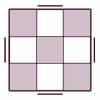 |
r' R U (R U R’ U’) (M2’) U R U’ r’) |
Checker orientation. The most rare orientation case, but certainly should not be missed out. The algorithm is similar to OLL02. Similarly, (M2') can be performed as (r2 R2'). |
2L-OLL: Edges without corners
The following 7 algorithms are the 7 basic OLLs that I first learnt when I was still using 2-look OLL method. This method requires you to first flip the four edges by using either OLL11 or OLL26 or both, depending whether you need to flip two adjacent or opposite edges or all 4 edges. Therefore, all these 7 basic OLLs have the edges flipped correctly and the only thing that you need to work on is the corners. Memorize them well before you move on to others. |
| 04 |
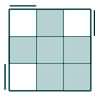 |
R’ U2 R U R’ U R |
Fish type 1. Very quick algorithm. Also the first OLL I learned. Notice the R pattern. It alternates between R’ and R, with all clockwise U turns in between. |
| 05 |
 |
R’ U’ R U’ R’ U2 R |
Fish type 2. Inverse of OLL05. Differentiate them by the stickers on the side. The R alternates between the U turns. |
| 06 |
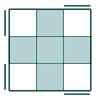 |
R U2’ (R2’ U’ R2 U’) (R2’ U2 R) |
Cross type 1. Perform the first U2’ with the aid of right thumb. The last set of moves is done totally with right hand from below with a quick double flick. |
| 07 |
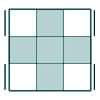 |
R’ U’ R U’ R’ U R U’ R’ U2 R |
Cross type 2. The R turns alternates like the OLL05, from R’ to R back to R’. Perform the first U’ with right thumb, the rest of the U’ with left hand. |
| 08 |
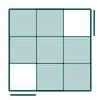 |
F R' F' r U R U' r' |
Bowtie. Invserse of OLL09 |
| 09 |
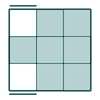 |
(r U R’ U’) (r’ F R F’) |
Chameleon. It is similar to OLL12. Just change the capital R to small r for the two quickest triggers. In fact, it is even more similar to OLL08. Just move the first F’ of the bowtie to the back and you get chameleon. |
| 10 |
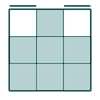 |
(R2) D’ (R U2 R’ D) (R U2 R) |
Spotlight. Perform D’ flick with right ring finger, and D with left ring finger. Only regrip once after the D’ turn. |
Other shapes
Some other basic shapes that I find easy to memorized. They come in pairs. Learn these after you learnt the 7 basic OLLs. |
| 11 |
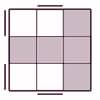 |
F (R U R’ U’) F’ |
T orientation type 1. Definitely the shortest and the quickest OLL ever. Should be no problem here. It is just the fast RURU trigger sandwiched between two Fs. |
| 12 |
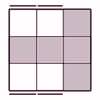 |
(R U R’ U’) (R’ F R F’) |
T orientation type 2. A little slower than its counterpart (OLL12), but definitely fast as hell too. It is made up of two quickest triggers, RURU RFRF. Second part of PLL10. |
| 13 |
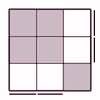 |
(F R U’) (R’ U’ R U) (R’ F’) |
This is the first part of the Y permutation algorithm (PLL10). No change of finger gripping, fast algorithm, flows nicely. Perform the U’ and F’ with right thumb. |
| 14 |
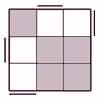 |
(R U2’ R’) (R’ F R F’) (R U2’ R’) |
A very quick RFRF trigger sandwiched between two identical RU2R algorithm. Notice that the R’R’ should be performed as a big R2’ in practical, but you may memorized them as R’R’. |
| 15 |
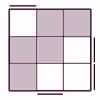 |
(R U R’ U) (R U’ R’ U’) (R’ F R F’) |
M orientation type 1. Put the pair of side stickers and your right to decided which M orientation it is. No hard tricks here. Simply RURU and RFRF triggers with some modification. |
| 16 |
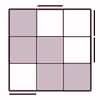 |
(R’ U’ R U’) (R’ U R U) (R B’ R’ B) |
M orientation type 2. Got this from Harris Chan. Right hand barely let go of the grip when performing this algorithm. The only adjustment is on the left hand during the last set of moves. |
| 17 |
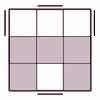 |
(R U R' d') R' F' r U M |
C orientation. Take out a F2L pair and roate the cube at the same time using R U R' d. The M turn is done with left index finger. |
| 18 |
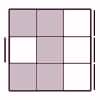 |
R’ U’ (R’ F R F’) U R |
C bar orientation. Face the 3 stickers on the right. Notice that the RFRF trigger is sandwiched in between RU and UR. Easy and quick algorithm. The last U is performed with right middle finger to avoid regripping. |
Dot orientation
The next 7 OLLs are all dots. The algorithms are related, some inverse of each other. First learn OLL19 and OLL20. Then OLL21, 22, 23. And lastly OLL24 and OLL25. Differentiate OLL19 from OLL20 by putting the corner dot and the two side stickers on the right face then determine whether the corner dot is above or below. |
| 19 |
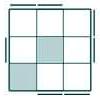 |
f (R U R’ U’) f’ U’ F (R U R’ U’) F’
|
Combination of two OLLs (OLL19 and OLL 11) with a clever U’ in between. Nothing fancy here. Quick and simple. |
| 20 |
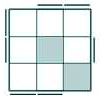 |
f (R U R’ U’) y x R’ F (R U R’ U’) F’
|
Inverse of OLL21 plus a y2. Just like OLL21, instead of doing U’, now do U. I changed the notation slightly to include cube rotation to depict what actually happens when I execute the algorithm. |
| 21 |
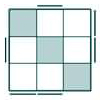 |
(F R' F' R) M (U R U' R' U') M' |
Diagonal orientation. Inverse of OLL 23. M performed with left index finger, M' with left ring finger. |
| 22 |
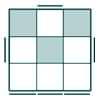 |
r U R’ U R U2 r2’ U’ R U’ R’ U2 r |
V bar orientation. OLL 23,24, and 25 are related. |
| 23 |
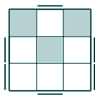 |
M U (R U R’ U’) M’ (R’ F R F’) |
V orientation. Inverse of OLL21. The two quickest triggers RURU and RFRF, embedded in M and U turns. |
| 24 |
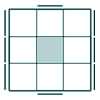 |
R U2 R’ (R’ F R F’) U2 (R’ F R F’) |
You can remember it as R U2 R’ follow by repeating the quick RFRF trigger connected by a U2 turn. But in practical, remember that R’R’ should be performed as a big R2’ turn. |
| 25 |
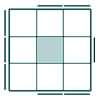 |
F (R U R’ U’) F' f (R U R’ U’) f’ |
F' f can be replaced by S turn. |
P orientations and Big lightning bolt.
OLL26 and OLL27 are very fast and simple algorithms and are mirror image of each other.The next four following OLLs are related (OLL28 to OLL31). Learn them in groups. |
| 26 |
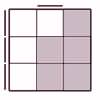 |
f (R U R’ U’) f’ |
P orientation type 1. Inverse of OLL11 plus a U2 turn. Very similar finger tricks with OLL11. Instead of doing F, now do double layer f instead. |
| 27 |
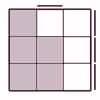 |
f’ (L’ U’ L U) f |
P orientation type 2: Mirror image of OLL19. Convert everything to left hand. A very quick and short algorithm too. |
| 28 |
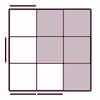 |
(R’ U’ F) (U R U’ R’ F’ R) |
P orientation type 3. Inverse of OLL30. Mirror image of OLL29. |
| 29 |
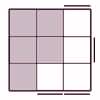 |
L U (F’ U’ L’ U L F) L’ |
P orientation type 4. Mirror image of OLL28. Inverse of OLL31. Good practice for left hand. |
| 30 |
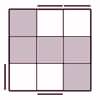 |
R’ (F R U R’ U’ F’) U R |
Inverse of OLL28. Mirror image of OLL 31. In brackets is the very fast T orientation type 1 (OLL11). |
| 31 |
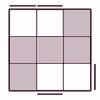 |
L (F’ L’ U’ L U F) U’ L’ |
Inverse of OLL29. Mirror image of OLL30. Heavy left hand moves as well. |
The L Shape orientation
The next 6 OLLs are the L shape orientation. Learn them in pairs, ie: OLL32 with OLL33, OLL34 with OLL35 etc. Don't get confused with the recognition of the shapes. |
| 32 |
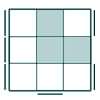 |
r U R’ U R U’ R’ U R U2’ r |
Pretty cool algorithm when performed fast. All done with right hand except for U’ and the last U2’ turn to avoid regripping of right hand on R layer. |
| 33 |
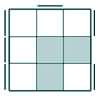 |
r' U’ R U’ R’ U R U’ R’ U2 r |
No regripping of right hand at all. Just swing it back and forth from r’ to R to R’ and so forth. Performed U’ with left hand; the rest are all done by right hand. |
| 34 |
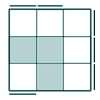 |
l U’ l2’ U l2 U l2’ U’ l |
Inverse of OLL35. Just make sure the l2 is performed accurately and everything else will be fast as lightning. |
| 35 |
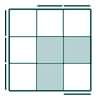 |
r’ U r2 U’ r2’ U’ r2 U r |
Inverse of OLL34. |
| 36 |
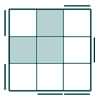 |
F (R U R’ U’) (R U R’ U’) F’ |
Simple T orientation (OLL11) performed twice in a row. |
| 37 |
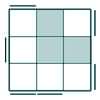 |
F' (L' U' L U) (L' U' L U) F |
Mirror image of OLL36. |
Squares and lightning bolts.
OLL38 to OLL41 are related. Learn them together. All of them have similar finger tricks and algorithm. When the r is performed as R, the algorithm becomes the fish OLL, ie: variation of OLL04 and OLL05. OLL42 and OLL43 are two more lightning bolts executed in a different algorithm then the other 4. |
| 38 |
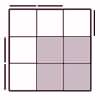 |
r' U2 (R U R’ U) r’ |
Square orientation case 1. Similar to OLL04, execute r instead of R. finger tricks is the same. Place the single sticker on the right and decide which square it is. |
| 39 |
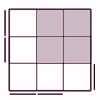 |
r U2 R’ U’ R U’ r’ |
Square orientation case 2. Similar to OLL05, holding in a different direction. |
| 40 |
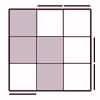 |
r' U’ R U’ R’ U2 r |
Small lightning bolt case 1. Inverse of OLL38. Similar algorithm execution as OLL05, just change R to r for the first and last movement. |
| 41 |
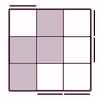 |
r U R’ U R U2 r’ |
Small lightning bolt case 2. Inverse of OLL39. Similar to OLL04 holding in a different direction. |
| 42 |
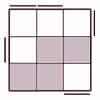 |
(r' R2 U R’ U) R U2’ (R’ U r R’) |
Small lightning bolt case 3. The last (r R') move can be performed as M' with left ring finger. I like it to be M' more. |
| 43 |
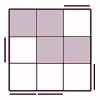 |
(r R2’ U’) (R U’ R’ U2 R U’) r’ R |
Small lightning bolt case 4. Similarly the last (r' R) move can be performed as M, with right index finger from top. |
4 cases of straight Line orientation.
If there is a bar of three stickers, place it on the right side of the cube. If there is a second bar of three stickers, then you know which case you have immediately. If there is no bar of three stickers, then there is either a bar of two stickers or no bar of stickers at all. |
| 44 |
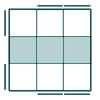 |
f (R U R’ U’) (R U R’ U’) f’ |
Straight line case 1. Quick algorithm. Similar to P orientation, OLL26, with the RUR’U’ performed twice instead. |
| 45 |
 |
F (R U R’ U’ R) F’ (r U R’ U’) r’
|
Straight line case 2. Easy to recognize since the side stickers are all spread out. Fairly quick algorithm with the RUR’U’ trigger. Just remember to add a R at the end of the first set of triggers. The F' move is done with right index finger with a push. |
| 46 |
 |
(R U2’ R2’ U’) (R U’) (R’ U2’) (F R F’) |
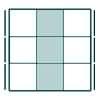
Straight line case 3. Only let go the right hand grip once when performing the last set of moves. Perform U2’ turn with thumb and left index finger. |
| 47 |
 |
R 'U' RU 'R' d R 'U R B |
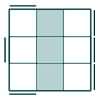
Straight line case 4. The d turn comprises a y cube rotation. |
L shape plus dot & Straight line plus dot
Notice that OLL48 to OLL51 are related to each other. OLL52 and OLL53 are just mirror image of each other. Learn these in groups. |
| 48 |
 |
(R U R') y (R' F R U' R' F' R) |
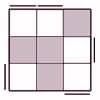
Inverse of OLL50 |
| 49 |
 |
(R U R' U') R' F (R2 U R' U') F' |
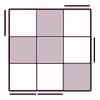
Inverse of OLL51. |
| 50 |
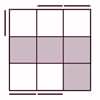 |
(R’ F R U R’ F’ R) y’ (R U’ R’) |
Inverse of OLL48. |
| 51 |
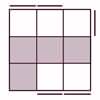 |
F (U R U’ R2) F’ R (U R U’ R’) |
Inverse of OLL49. |
| 52 |
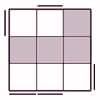 |
(r U r’) (R U R’ U’) (r U’ r’) |
Mirror of OLL53. |
| 53 |
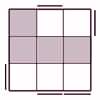 |
(l' U' l) (L’ U’ L U) (I’ U l) |
Mirror of OLL52. (l' U' l) can be done as (R’ F’ R). |
Small lightning plus dot
Put the lightning horizontally like case of OLL56 and OLL57. If you can’t put it that way, then it would be orientation of case 54 and 55. Next determine if the side sticker are all separated, or there is a pair of them, and decide which case it is. |
| 54 |
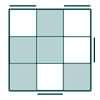 |
(R U R’ U) R U2’ R’ F (R U R’ U’) F’
|
No regripping at all. This algorithm flows amazingly smooth. Perform the U2’ with the right thumb left index flick technique. The last set of moves is just the simple T orientation. |
| 55 |
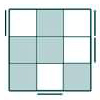 |
F (R' F R2 U' R' U' R U R') F2 |
Got this algorithm from Harris Chan. Simple and easy. The last F2 is done by double flicking with right hand. |
| 56 |
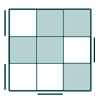 |
(R' F R F') (R' F R F') (R U R’ U’ R U R’) |
Very quick algorithm. You can perform the first two RFRF triggers a sx (R’ U R U’) (R’ U R U’) x’. |
| 57 |
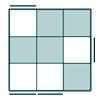 |
(R U R’ U’) (R U’ R’ F’) U’ F (R U R’) |
Last OLL algorithm! What a relief. And it turns out that it is a very simple one as well. It flows very smoothly. The U’ in the second set moves is done with right thumb. |