 |
|
 |
2x2x2
XLL/PLL
Step 3 of Ortega's method will solve the entire cube by permuting both layers in one look. There are all together 5 XLL and 2 PLL cases on a 2x2x2 cube. It might take some time before you become adept at recognizing the patterns. If possible, learn how to execute these algorithms from different angles as well to minimize cube rotations.
|
|
PLL
One layer is permuted, leaving the other layer unsolved with only two possible cases. |
| |
Pattern |
Algorithm |
Description |
| 01 |
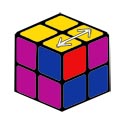 |
R U2' R' U' R U2' L' U R' U' L |
The algorithm swaps two opposite pieces without disrupting the top yellow orientation. Similar 3x3 algorithms that can be applied to make the swap are J, R, A, T, F, and other that can swap two adjacent corners. |
| |
|
|
|
| 02 |
 |
R U' R' U' F2 U' R U R' D R2 |
The algorithm swaps two diagonal pieces without discrupting the top yellow orientation. Similar 3x3 algorithms that can be applied to make the swap are Y, N, V, and other that can swap two diagonal corners. |
|
|
| |
|
|
|
XLL
Each 5 of the XLL cases below consist of two unsolved side surfaces. The idea of XLL is to permute both layers at the same time. |
| |
Pattern |
Algorithm |
Description |
| 01 |
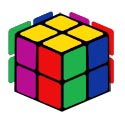 |
x' R2 U2' R2' |
All four slots consist of blocks of different colors. Should be able to recognize easily. A very short and cool algorithm too. |
| |
|
|
|
| 02 |
 |
R2' U' R2 U2' F2 U' R2 |
Put the solved side behind. The rest of the cube appear to be 4 distinct blocks. |
| |
|
|
|
| 03 |
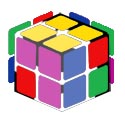 |
R U' L U2' R' U R'
When executing from behind,
L U' R U2' R' F R'
|
There is one solved 1x1x2 block. It will form a L shape with its corner as shown in the diagram. The next XLL04 case is its mirror. |
| |
|
|
|
| 04 |
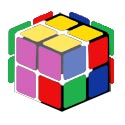 |
L' U R' U2' L U' L
When executing from behind,
R' U L' U2' R U' R |
Mirror image of XLL03. Also consist of only one solved 1x1x2 block connected to its corner on another layer on front left bottom corner. The L shape is facing left now. |
| |
|
|
|
| 05 |
 |
R2 U R2 U2' y' R2 U R2 U' |
In this case, there are two solved 1x1x2 blocks. One on the top layer, the other on the bottom. Align them both at the Front face facing you, and apply the algorithm. It might look like two L shapes when you perform U turns. The last U' in the algorithm is adjustable, depending on the case. |
| |
|
|
|
|
|
| |
|
| |
|
|